Birding With Warm Thoughts

With the holidays upon us, for many, it is that time of year for destination travel. So even though the temperatures are dropping outside my window, and I’ve been stacking the books up, readying myself for hours of reading under cozy blankets, I’ll be focusing my thoughts on someplace warm, maybe even tropical!

A lot of birds migrate in the winter months from the United States and Canada to the Caribbean, Mexico, and Central America, but not all birds travel far. Some are year-round inhabitants to the sun kissed tropics.

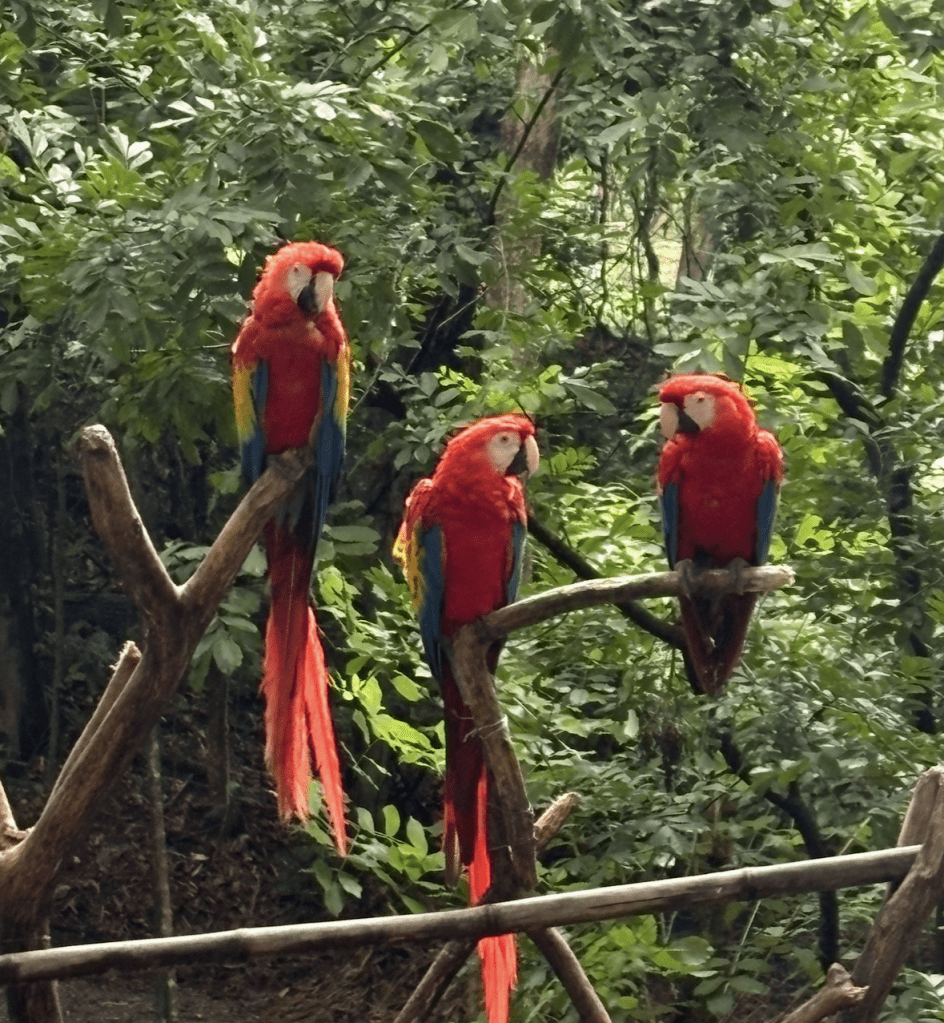
One of my favorite birds who doesn’t have to concern themselves with harsh winters is the Scarlet Macaw. This beautiful bird can be found in humid rainforests. Their lifespans are long for birds, with some able to live into their 80s or older. They are incredibly loud birds, with many mistaking their aggressive calls for other, often more dangerous, animals in the rainforest. Despite their vocalizations, they greatly enjoy socializing with others and preening their partners.

Three Scarlet Macaws at an eco-park in Honduras. These birds can freely roam the open forest.

Not all tropical birds seem as otherworldly as the Scarlet Macaw. Another bird that is easy to spot in the tropics is the great-tailed grackle. The males look similar to the common grackle seen in the United States and Canada with the exception being that the tropical counterparts are much larger. (This in itself is fascinating as animal species tend to be smaller when they live closer to the equator as opposed to away from it! Look up “Bergmann’s Rule if you would like a deep-dive.)

Male and female great-tailed grackles in Mexico.

So as the cold bears down upon many of us in the northern hemisphere, maybe the thoughts of these beautiful birds will keep you warm.

Sending you cozy thoughts. Until next time!

P.S. If you’re interested in learning more about bird migration, I recommend this interactive map from Audubon.org. The Indigo Bunting is a nice bird to start with since its winter and summer zones are easily distinguished on the map. I’m a fairly amateur birder, so I’m sure that others with more experience and knowledge will definitely enjoy the app as much as I did, if not more!

Birds at Ellis Island

Hello everyone, and happy almost June!

I think I’ve missed almost all of spring as I’ve been hidden away, finishing up the fourth installment of the Emma Finch series! It is now available on Amazon in paperback and eBook.

While I’ve been busy writing about Emma and have neglected my blog a tad, I’ve still had some fun birding experiences since I last wrote on here. My favorite by far was a trip I took to New York City to see Ellis Island.

I had planned the trip because I wanted to experience the place that so many people traveled to when coming to the United States, but I ended up finding something that I think my fellow bird enthusiasts will appreciate.

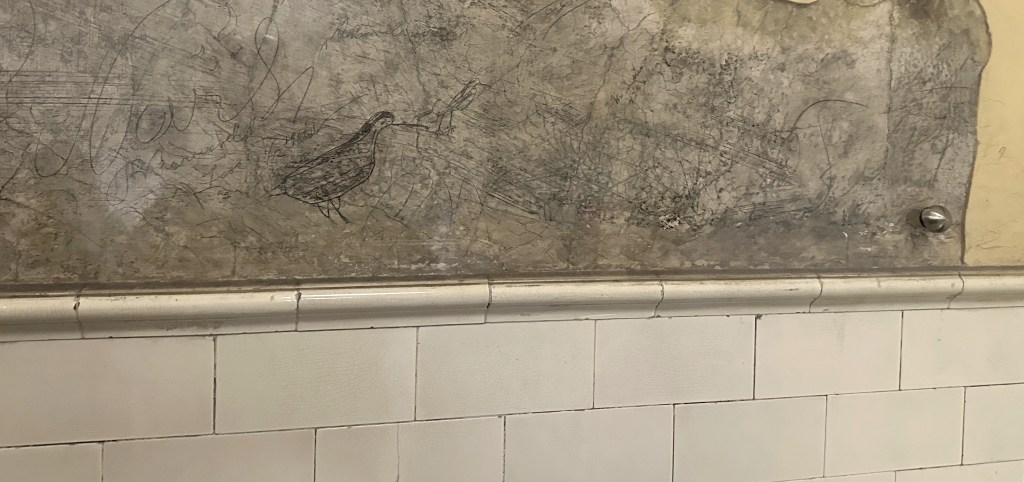
When people were processed on the island, they often spent long periods of time waiting in the Immigration Station. I’m sure as you all know, waiting for hours tends to lend itself to boredom. Our generation usually defaults to our phones in these scenarios (or for a lot of us readers, our books!), but I think we’ve all had a friend or two that doodles when they have time on their hands. Well, the same can be said for those who waited in those long lines at Ellis Island. Today, the museum still preserves small sections of the walls to show the graffiti that weary travelers left behind.

As I was going through the museum, imagine my delight at discovering one of those graffiti doodles was of a bird! I know many people love birdwatching, but seeing that someone took the time to draw a bird on the walls of Ellis Island reminded me that birdwatching isn’t just a hobby, it’s a pastime that humans have enjoyed for generations. It’s fascinating to think that when we go out looking for a certain bird, or even go hiking just to see what’s around, we’re participating in a tradition that our ancestors enjoyed so long ago.

You can see the picture below. What do you think it might be? Personally, I’m stumped.

Winter Coats

I hope you are all having a wonderful time now that the cold, winter season is upon us! Surprisingly, winter seems to be a contentious subject with some loving it and some despising it.

One thing I like about winter is the wardrobe. There’s something about a nice pair of boots that makes me feel warm and cozy. Another thing I know that keeps me toasty is a nice winter coat, but did you know people aren’t the only ones who have winter coats? Some birds shed their feathers and replace them with darker colors this time of year.

One that stands out to me is the starling. Unlike their shiny summer coats, they go speckled in the winter. The goldfinch is another bird that sheds its summer jacket for something a bit more mundane. Male goldfinches turn a bit olive when temperatures drop. I find this makes them trickier to identify in the winter than the summer since the males resemble pine warblers. Relying on range maps can be helpful in this scenario.

Not all birds shed their colors in the winter months. I think my favorite bird to see in the winter is the cardinal. The males retain their bright red bodies and black masks throughout the season and the females their dusky rose.

So, what’s your favorite winter bird?

Crow Season

Happy end of October! I hope that wherever you are, you are enjoying some of the fun activities autumn has to offer.

This weekend, I got into the festivities myself and carved a pumpkin. I tried my hand at creating a crow silhouette (other than the feet, it didn’t turn out too well!).

It’s easy to understand why birds like crows are associated with autumn. Their calls sound spooky, and their dark coloring and reaching wings remind us of night. But in general, I think crows get a bad rap.

Some people may be surprised to learn that crows are particularly smart creatures compared to many of their fellow birds. People familiar with the species know that they actually enjoy gift giving! Among those who count birdwatching as a hobby, it’s a common story to be heard that those who feed crows often times receive gifts from their flying friends in the form of shiny objects. (I’ve never had this happen to me, but then again, I haven’t had the chance to form any bonds with the local crows!)

The closest I’ve ever come to experiencing this unique ritual was between a mother crow and her offspring. While a large crow and what I presumed to be her two children explored a grove of trees, one of the smaller birds picked a fresh, green leaf off a branch and held it out towards the larger bird the same way a human child would to their parent. The mother bird didn’t take the leaf, but that didn’t deter the smaller bird from holding it out to her for a long time.

In my mind, I like to think I experienced an attempted crow gift-giving (but maybe I just came across a crow who was a little odd!). Anyway, I thought the small story fit well with the season since in a couple of days, children will be bounding about, trick-or-treating, and hoping that their neighbors will give them a small candy gift.

Happy autumn!

A long overdue post

Welcome to the most recent entry of my bird blog! I know that I haven’t posted in a while, but the great news is that’s because I have been spending time working on the third installment of the Emma Finch series. I won’t dwell too much on it, but let’s just say Emma will be off to somewhere new again!

In terms of my own bird watching, I’m definitely not as dedicated to it as Emma is, but there are some fun things I thought I would touch upon now that it’s summer and the weather has changed.

With the higher temperatures, it feels like it is impossible not to catch some ducklings in the park swimming after their mother, but did you know that these baby birds aren’t the only type of birds that need some parenting? Fledglings are birds that are no longer babies, but they’re not exactly mature enough to be called adults, and in some cases, they’re still reliant on their parents for guidance. One thing a lot of birds do is teach their children how to forage for food—I guess it’s similar to how we teach our own children how to go to the grocery store (just kidding!)

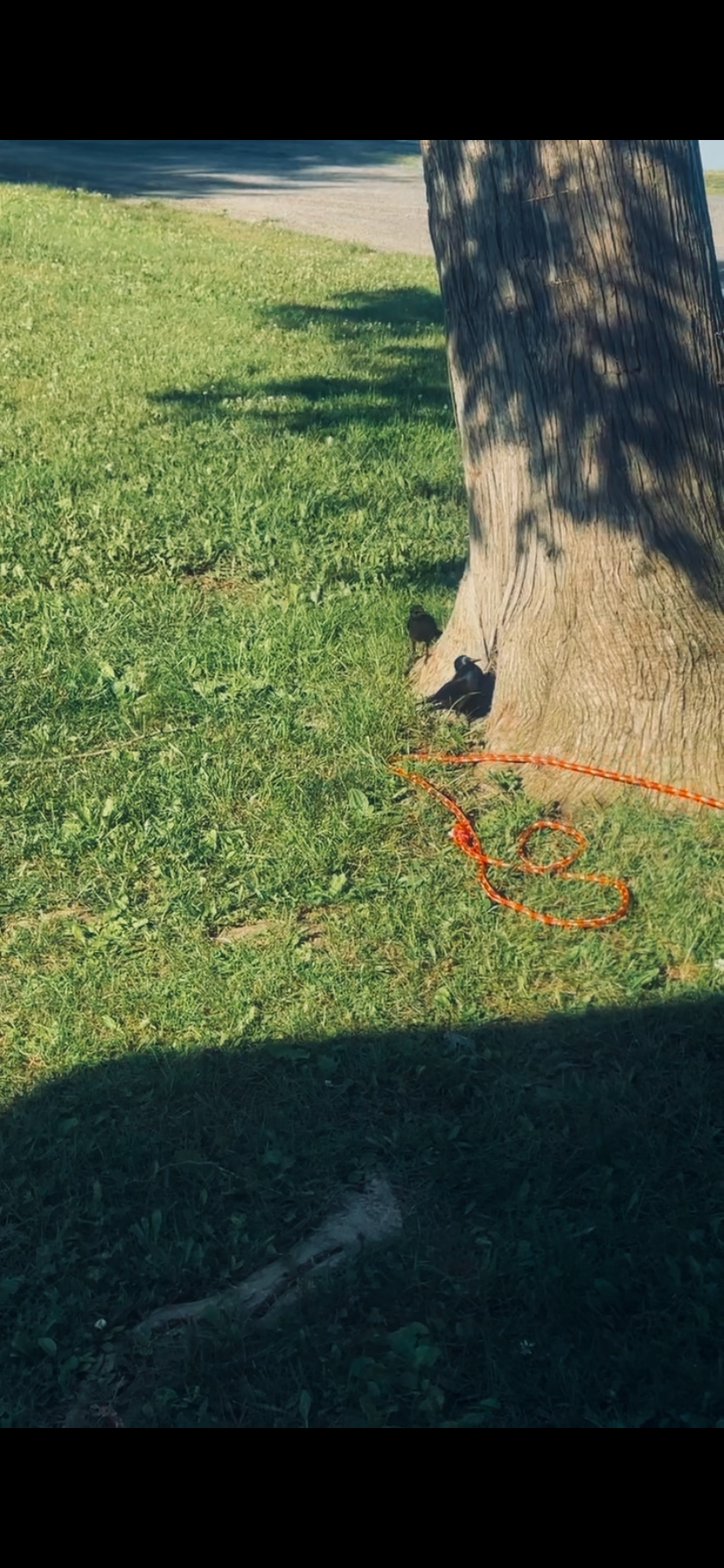
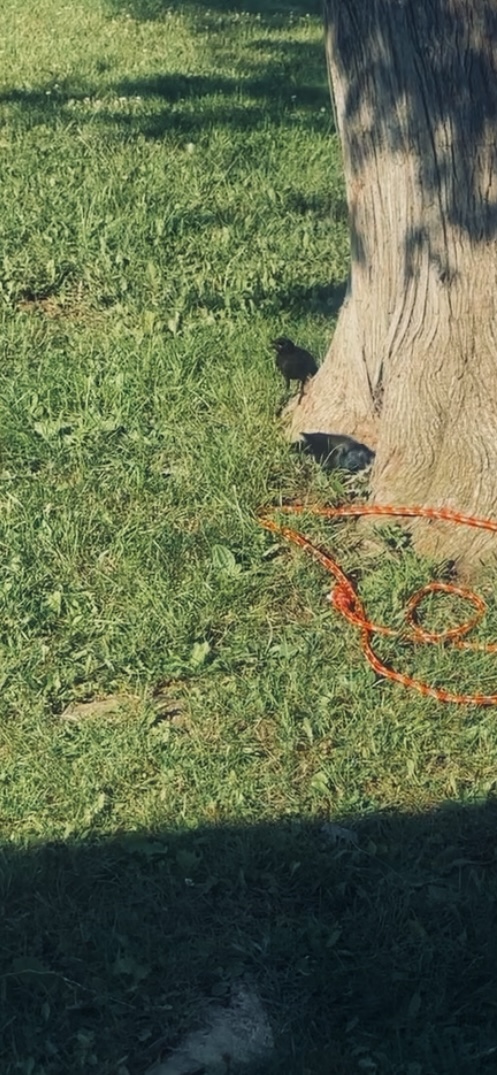
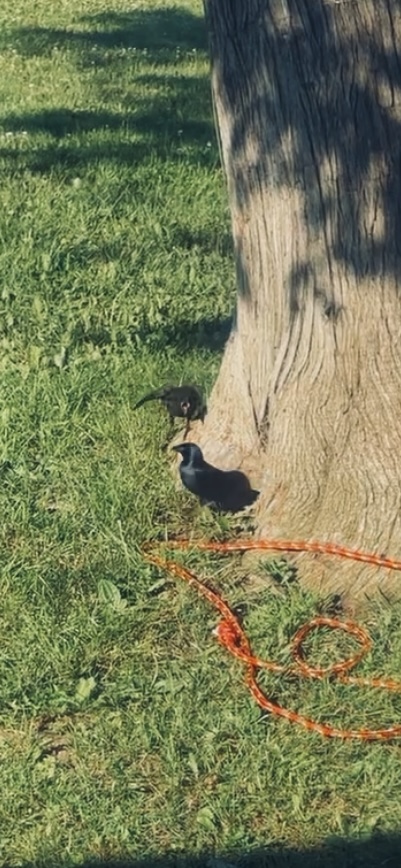
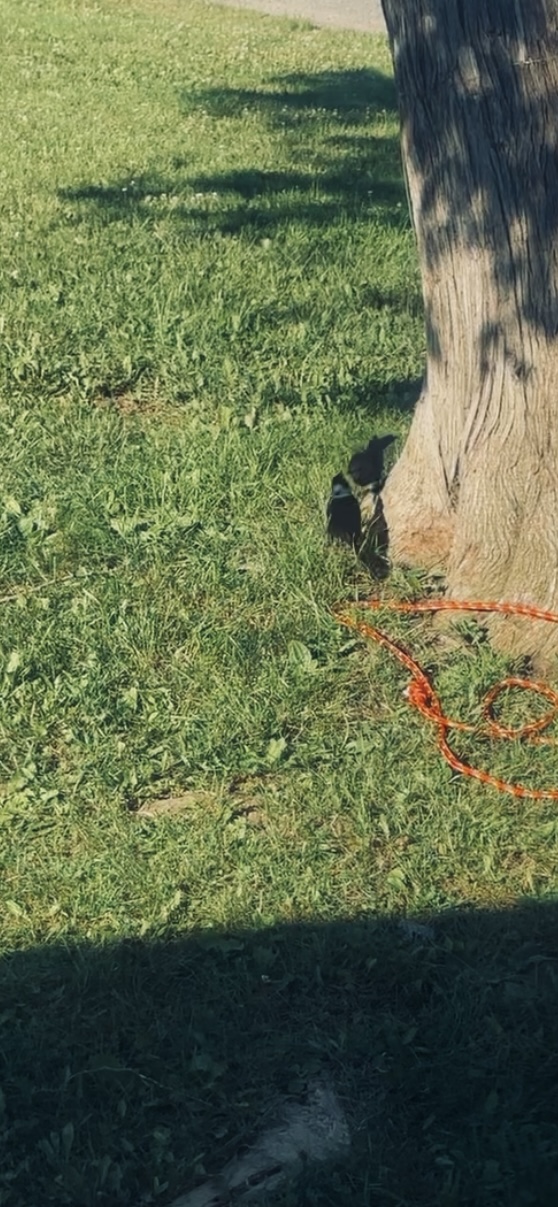
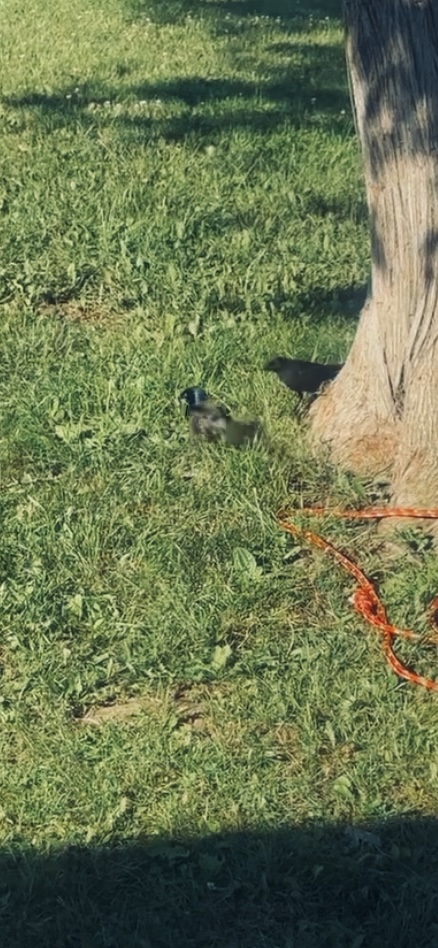
A few days ago, I had the pleasure of observing a parent grackle with their fledgling as they poked around and looked for their breakfast. In fact, the calls of the fledgling are what alerted me to the pair. Despite looking like a full-grown bird (minus the colorful markings and shine of the adult grackle), the fledgling cried just like a hatchling. It was funny to see a large bird chirping at its parent for food. By far, the most interesting part was when the parent grackle fed its baby just like they would’ve done if the two had still been in the nest.

Check out the freezeframes I was able to get from a video of that morning below! (The original video was giving me some issues, so I decided the slideshow below would work. It allowed me to emphasize the shot of the baby opening it’s mouth as well. One of the tell-tale signs that you are watching a fledgling and not an adult bird is that fledglings usually have wide mouths similar to baby birds. The image below is a nice example of this).